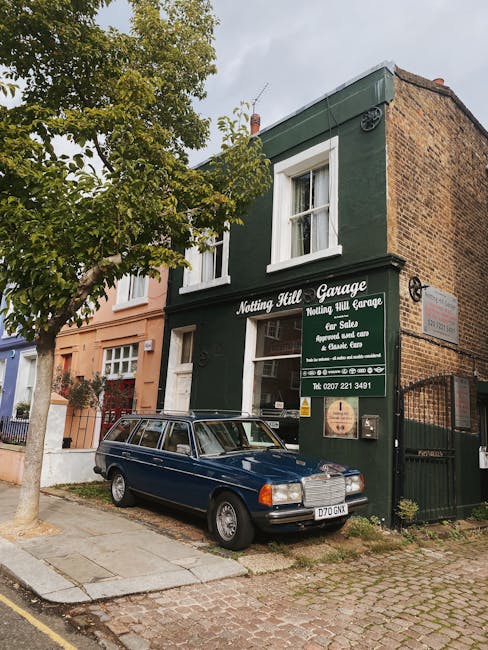
Moving in and around Ladbroke Grove sounds straightforward until the van meets a tight side street, parked cars on both sides, and a staircase that was clearly designed to test patience. In Notting Hill, the difference between a smooth move and a frustrating one is usually planning, timing, and choosing the right removals approach for the street you actually have to work with. This guide to Ladbroke Grove removals focuses on the real-world details that matter on narrow roads: access, parking, load size, packing discipline, and the small decisions that save time on moving day.
Whether you are relocating a flat, a family home, student accommodation, or a small office, the same principles apply. The narrower the street, the more your preparation counts. You will also find practical advice on choosing the right service, avoiding common bottlenecks, and understanding when a man and van in Notting Hill is enough, and when a larger, fully planned move makes more sense. If you are still comparing options, the removal services overview is a good starting point.
Table of Contents
- Why this matters in Notting Hill
- How narrow-street removals work
- Key benefits and practical advantages
- Who this is for and when it makes sense
- Step-by-step guidance
- Expert tips for better results
- Common mistakes to avoid
- Tools, resources and recommendations
- Law, compliance, standards and best practice
- Options and comparison table
- Case study example
- Practical checklist
- Conclusion
- Frequently asked questions
Why Ladbroke Grove Removals: Narrow-Street Tips for Notting Hill Matters
Ladbroke Grove sits in one of London's busiest and most characterful neighbourhoods, and that character often comes with limited kerb space, narrow residential roads, controlled parking, and awkward loading conditions. For removals, those details are not side issues. They are the job.
In practical terms, a move in a wide suburban street can be handled with a more flexible approach. In Notting Hill, by contrast, access often dictates everything: the size of vehicle, how close it can stop, how many trips are needed, whether you need temporary parking arrangements, and how early the crew should arrive. A small miscalculation can mean extra carrying distance, delays, or even the need to repack items at the kerb. Nobody wants a sofa waiting on a pavement while someone tries to reverse a van around a delivery truck. That is rarely anyone's idea of a great moving day.
This is also why local knowledge matters. A team experienced with removals in Notting Hill tends to plan differently from a crew that mainly works on easier roads. They will think about street width, access windows, entry points, and the practical sequence of loading. If you are moving within the area, the local Notting Hill living guide can also help you understand the rhythm of the neighbourhood, which is useful when choosing the best time to move.
How Ladbroke Grove Removals: Narrow-Street Tips for Notting Hill Works
Narrow-street removals work by reducing uncertainty before moving day. The goal is to make the route from property to vehicle as short, safe, and predictable as possible. That means planning the vehicle, the packing, the parking, and the lifting before anyone starts carrying boxes.
In a typical move, the process looks something like this:
- Assess access - measure stair width, lift access, hallway bends, and the distance from door to parked vehicle.
- Choose the right vehicle - not always the biggest one; sometimes a smaller, more manoeuvrable van is the better tool.
- Confirm parking and loading arrangements - especially on streets where stopping is limited or heavily used.
- Pack by priority - essentials, fragile items, and awkward furniture should be identified early.
- Load in a logical order - heavy, stable items first; fragile or high-value items protected and accessible.
- Finish with a final walk-through - check cupboards, lofts, meter areas, and behind doors.
For compact properties and flat moves, this is often the difference between a same-day completion and a move that drifts into late afternoon. If you need a more tailored solution for smaller homes, flat removals in Notting Hill are often designed around these access challenges. For heavier pieces, furniture removals support can be especially useful when sofas, wardrobes, or dining tables need careful handling through tight spaces.
Key Benefits and Practical Advantages
The main advantage of good narrow-street planning is simple: it saves time and reduces stress. But there are several more specific benefits worth understanding.
- Shorter carrying distances when parking and access are planned properly.
- Lower damage risk because items are moved with fewer awkward turns and less rushed handling.
- Better timing because the team can work around local traffic, parking patterns, and building access.
- Cleaner communication between you and the removal crew, especially when multiple access constraints exist.
- More accurate pricing because the job is scoped correctly from the outset.
There is also a mental benefit people underestimate. A well-planned move feels manageable. You know what is happening, when, and why. That calm matters when you are leaving a home, a lease deadline is approaching, or you are trying to avoid upsetting neighbours with a van blocking the road.
For people needing flexibility, a local man with a van service in Notting Hill can be ideal for smaller loads or partial moves. For larger households, a structured house removal service gives you more support with planning, lifting, and coordination.
Who This Is For and When It Makes Sense
This approach is not only for people living directly on Ladbroke Grove. It helps anyone moving in or around the surrounding Notting Hill streets where parking is tight, properties are often split into flats, and access can be less than generous.
It makes particular sense if you are:
- moving from a top-floor flat with narrow stairs
- relocating from a period property with tight hallways or awkward corners
- moving a student room or shared house with multiple drop-off points
- transporting heavy or fragile furniture
- working around school runs, weekday traffic, or resident-only parking restrictions
- needing a quick turnaround without the luxury of extra space
It is also relevant if you are comparing service types. Some moves are perfectly suited to a dedicated removal van in Notting Hill, while others need a broader service package with packing help, storage, or multiple crew members. If you are unsure, look at the type of property first, not just the number of boxes. A small flat full of bulky items can be harder to move than a larger, better-organised one.
For students, the logistics are often different again. Term dates, key handovers, and shared transport windows can make a student removals service the most efficient option. It is less about "big" or "small" and more about timing, access, and simplicity.
Step-by-Step Guidance
If you want the move to go smoothly, use a process rather than a guess. Here is a practical sequence that works well for narrow Notting Hill streets.
1) Measure the problem before you solve it
Check the width of staircases, the number of turns, lift dimensions, and the distance from your front door to the nearest safe loading point. If a wardrobe barely fits through the hall on a normal day, it will not become friendlier on moving day.
2) Decide what really needs moving
Not everything should travel. This is where a clear sort-out helps. If you have duplicates, damaged items, or furniture that no longer fits the new place, remove it from the moving plan early. If you need temporary overflow space, storage in Notting Hill can bridge the gap between properties without forcing a rushed decision.
3) Pack for access, not just for storage
Label boxes clearly, but also pack them with their journey in mind. Heavy items in smaller boxes are easier to carry down tight stairs. Fragile items should be protected and not buried under soft goods that can shift.
4) Reserve the right service level
If the route is cramped and the building access is awkward, the cheapest quote may not be the best value. Ask whether the company has experience with the area and the type of property. If you need a broader range of help, the full range of removal services may be more appropriate than a simple van hire model.
5) Plan your loading sequence
Load the van in a way that protects the most awkward items. Heavy boxes and appliances usually go in first, with fragile items secured where they will not shift. This is basic, but it is also where many moves go sideways. A rushed load often leads to a messy unload.
6) Keep essentials with you
Documents, chargers, medication, keys, and a change of clothes should not disappear into the moving pile. Keep a small essentials bag separate and obvious.
7) Leave a margin of time
In a narrow-street area, the unexpected is normal: a delivery truck, a blocked curb, a delayed lift, or a neighbour who suddenly needs access. Build in a buffer. That little margin often saves the day.
Expert Tips for Better Results
There are a few habits that consistently make removals easier in Notting Hill.
Use off-peak timing where possible. Early starts usually help, especially when streets are quieter and parking options are less contested. If you can avoid school-run periods or busy weekend activity, do it.
Pre-clear the hallway and landing. Even a small amount of clutter slows everything down. Shoes, prams, coats, and recycling bags all become obstacles when someone is carrying a mattress down two flights of stairs.
Protect the building as well as the furniture. Door frames, bannisters, and corners often take the first hit on narrow moves. Good teams use covers and protectors because repair work is far more expensive than a bit of prevention.
Separate fragile and high-value items early. If you have art, antiques, mirrors, or specialist pieces, treat them as a separate category. For exceptional items, a specialist option like piano removals in Notting Hill shows why tailored handling matters.
Ask about the plan, not just the price. A precise quote is useful, but the method matters more. How many crew members? What vehicle size? How will they handle access if the curb is blocked? These are the questions that reveal whether the team has thought through the job.
Use packing materials that actually suit the item. Good boxes, tape, wrap, and labels reduce breakages and confusion. If you want to prepare properly, packing and boxes in Notting Hill is a helpful resource, especially if you are moving with limited time.
Expert summary: In narrow Notting Hill streets, success usually comes from reducing variables. The fewer surprises in parking, packing, and access, the smoother the move.
Common Mistakes to Avoid
Most moving problems in this part of London are preventable. The usual mistakes are not dramatic; they are just inconvenient and expensive.
- Booking the wrong size vehicle and discovering the street cannot accommodate it safely.
- Assuming parking will sort itself out when the area is actually busy and tightly controlled.
- Packing heavy boxes too large, which makes them difficult to carry and more likely to split.
- Leaving furniture disassembly too late, then losing time on the day.
- Forgetting building access details such as lift booking times, entry codes, or concierge procedures.
- Underestimating how long a short route can take when stairs, doors, and kerbs are involved.
Another common issue is the "I'll just sort that on the day" approach. It sounds harmless. It usually is not. In a wide driveway, you can sometimes improvise. In Ladbroke Grove or nearby streets, improvisation tends to cost time. And time is what you least want to lose when you are trying to complete a move before handover.
Tools, Resources and Recommendations
You do not need a complicated toolkit to move well. You do need the right basics.
- Strong boxes in mixed sizes for sensible packing weight.
- Packing tape and labels for clarity and faster unloading.
- Furniture blankets or protective wraps to reduce surface damage.
- Trolley or sack truck for heavier items where stairs and curbs are manageable.
- Door and corner protectors if the route inside the building is tight.
- Phone notes with access details so nobody is hunting for entry codes at the wrong moment.
It also helps to review service and support pages before you commit. A good local company should be transparent about pricing and quotes, clear on insurance and safety, and open about how it handles health and safety. Those pages are not just formalities. They tell you how the business thinks.
If sustainability matters to you, ask how the move handles recyclable packing material and unwanted items. The recycling and sustainability approach can be a useful signal of how responsibly the company operates overall.
Law, Compliance, Standards, or Best Practice
For removals in London, the main compliance concerns are usually practical rather than complicated: parking rules, building access requirements, safe lifting, and proper handling of goods. Local parking restrictions may apply, and if a street is controlled or loading is limited, it is sensible to check the local arrangements in advance rather than assume a van can stop anywhere for long.
From a best-practice perspective, reputable removal companies should be able to explain how they protect people and property. That usually includes:
- careful manual handling
- appropriate vehicle loading
- basic protection for floors, doors, and furniture
- clear communication about risks and access constraints
- proper insurance arrangements where applicable
If you are comparing providers, look for clear public information on company policies and terms. Useful pages include about the company, terms and conditions, and the complaints procedure. These do not guarantee a perfect move, but they do indicate that the business takes accountability seriously.
For anything unusual - high-value items, difficult access, or same-day deadlines - it is best to be conservative. Ask direct questions. A good provider should answer them plainly.
Options, Methods, or Comparison Table
Different moving methods suit different types of Ladbroke Grove and Notting Hill properties. The right choice depends on load size, access, timing, and how much help you want on the day.
| Option | Best for | Strengths | Trade-offs |
|---|---|---|---|
| Man and van | Small flat moves, partial loads, quick local jobs | Flexible, efficient, often easier on narrow streets | Less suitable for larger households or complex loads |
| Dedicated removal van | Medium moves with planned loading | Good balance of capacity and manoeuvrability | May still require careful parking planning |
| Full house removals | Family homes, larger inventories, more furniture | More support, better for multi-room moves | Usually needs more coordination and time |
| Storage-assisted move | Gap between properties or staged relocation | Reduces pressure when dates do not line up | Needs extra planning and may involve multiple steps |
As a general rule, if your building access is awkward and your inventory is modest, a smaller and more agile setup often works best. If you are moving lots of furniture or several rooms at once, go for a more structured option. If timing is uncertain, storage can remove a lot of stress.
Case Study or Real-World Example
Imagine a couple moving from a second-floor flat near Ladbroke Grove into another Notting Hill property a few streets away. Their first instinct is to book the largest van available because "bigger must be better." After a quick access check, they realise the new street is tight, parking is limited, and the lift at the departure building is only available for a booked time slot.
Instead of pushing ahead blindly, they choose a smaller vehicle, split fragile items into clearly labelled boxes, pre-disassemble a bed frame, and arrange the loading sequence the day before. They also confirm the walking distance from the van to the entrance and keep the essentials bag separate. The move still requires effort, but it becomes orderly rather than chaotic.
That is the real lesson. In narrow streets, the goal is not to eliminate effort. It is to prevent friction. A little preparation turns a stressful move into a controlled one.
Practical Checklist
Use this checklist before moving day:
- confirm the exact moving date and access times
- measure doors, stairs, lifts, and key turning points
- check parking/loading restrictions for the street
- decide whether you need a van, full removals support, or storage
- sort items into keep, donate, recycle, or move
- pack heavy items in smaller boxes
- label fragile boxes clearly
- disassemble furniture that will not fit through the route
- set aside essentials, documents, and chargers
- protect floors, corners, and door frames if needed
- confirm insurance, terms, and payment details
- keep contact numbers handy for the moving team
Quick practical takeaway: if you can reduce how often a heavy item has to change direction, you have already made the move easier.
Conclusion
Ladbroke Grove removals in Notting Hill work best when the plan fits the street, not the other way around. Narrow roads, controlled parking, period properties, and busy local conditions all reward calm preparation. If you choose the right vehicle, pack sensibly, confirm access details, and work with a team that understands the area, you dramatically improve the odds of a smooth move.
Whether you are relocating a small flat, a full household, or a single valuable item, the same principle applies: reduce surprises. That is the heart of moving well in this part of London. For practical support, transparent service information, and local guidance, it is worth reviewing the company's Notting Hill removal company options and getting a quote that reflects the realities of your street and property.
Get a free quote today and see how much you can save.
If you are ready to talk through access, timing, or the best service for your move, contact the team here and share the details of your property. A few accurate notes upfront can save a lot of hassle later.
Frequently Asked Questions
What makes Ladbroke Grove removals different from other London moves?
The main difference is access. Narrow streets, limited parking, and period properties mean the move depends heavily on careful planning, vehicle choice, and timing.
How far in advance should I book a removal service in Notting Hill?
As early as possible if you have fixed dates, lift bookings, or parking constraints. The more access issues you have, the more value there is in booking early.
Is a man and van service enough for a flat move on a narrow street?
Often yes, especially for smaller flats or partial loads. If you have bulky furniture, multiple floors, or lots of boxes, a larger or more structured service may be better.
Should I choose the biggest van available to save time?
Not necessarily. On tight roads, a more manoeuvrable van may be easier to position and faster overall than a larger vehicle that struggles with access.
How do I prepare furniture for a narrow-street move?
Disassemble what you can, protect corners and surfaces, and make sure items can fit through doorways and stair turns before moving day.
What should I do if parking near my property is difficult?
Discuss it with the removals provider before booking. They can advise on timing, loading plans, and the most suitable vehicle size.
Can storage help with a Notting Hill move?
Yes. Storage is useful when dates do not line up, when you need to stage the move, or when not everything is ready to go at once.
How do I know if a removal company is trustworthy?
Look for clear service information, transparent quotes, safety and insurance details, and a straightforward complaints process. Those are practical signs of professionalism.
What items need special attention during removals?
Fragile items, mirrors, artwork, antiques, and heavy instruments need extra care. They should be identified early so the team can plan the right handling.
Are same-day removals possible in Notting Hill?
Sometimes, yes, depending on availability and the size of the job. A same-day request is easier when access is simple and the inventory is limited.
How can I keep moving costs under control?
Pack efficiently, declutter before moving, share accurate access details, and choose the right service level for your property rather than overbuying or underestimating the job.
What is the best next step if I am moving soon?
Start by checking access, making a rough inventory, and requesting a quote with honest details about the street, property type, and any parking or stair issues.
Can I ask about policies before booking?
Absolutely. It is sensible to review the company's terms, safety information, and other support pages before confirming anything, especially for more complex moves.